
Boat and Personal Watercraft Appraisals
We appraise boats and personal watercraft for insurance, estate settlements, divorces and donations.
You may be surprised to learn that having your boat or personal watercraft appraised is just as important as any other collector vehicle. Probably more so considering towing, storage and maintenance is so much more critical than an automobile.
Boat and Personal Watercraft Appraisals for Confident Ownership
Owning a boat, yacht, or personal watercraft is a major investment, and a professional boat and personal watercraft appraisal helps you protect that investment at every stage of ownership. Beyond a simple price estimate, a formal appraisal documents your vessel's condition, equipment, upgrades, and unique features in a way that banks, insurance carriers, and courts can rely on. By pairing on-site inspection with current market research, Auto Appraisal Network provides detailed reports that help owners buy and sell confidently, secure appropriate coverage, and support legal or tax-related needs when they arise.
Many owners are surprised to discover how many situations call for a well-documented marine appraisal. Lenders often require a certified value opinion before approving financing or refinancing, especially for higher-value yachts and specialty craft. Insurers may insist on an updated appraisal to bind agreed value or stated value policies, or when there have been significant upgrades or restoration work. Even when no one is asking for it yet, having a current appraisal already in place can streamline claims handling after damage or loss, reduce disputes about value, and speed up negotiations when a sale opportunity appears unexpectedly.
When a Professional Boat Appraisal Makes Sense
A professional boat appraisal is helpful any time there is uncertainty, disagreement, or risk surrounding what your vessel is truly worth. If you are purchasing a used boat, a formal valuation helps you avoid overpaying and gives you leverage when discussing price with the seller. If you own a rare, antique, or custom vessel that does not appear in price guides, an appraisal provides an independent opinion of value based on comparable sales and documented restoration costs. Appraisals are also commonly requested for divorce proceedings, estate settlements, charitable donations, partner buyouts, or when sharing ownership with family or business partners to set expectations and avoid future conflicts.
Unlike simple online price estimates, a comprehensive appraisal considers far more than model year and length. Appraisers review visible hull and deck condition, interior finishes, mechanical systems, electronics, rigging where applicable, trailer condition, and any recent upgrades from engines to navigation equipment. They also factor in regional demand for similar vessels, time of year, storage method, and evidence of professional maintenance. This multi-layered review leads to a value conclusion that can be defended with photos, itemized notes, and market data if questions ever come up.
How Boat Appraisals Support Insurance, Lending, and Legal Needs
For insurance, a properly prepared appraisal helps ensure that your coverage reflects what it would actually cost to repair or replace the vessel after a major loss. Policies based on outdated or generic book values may not recognize custom work, performance upgrades, or historically significant restorations. By documenting those details and assigning an appropriate value, your appraisal supports more accurate limits and can reduce the risk of being underinsured. When a claim occurs, the report becomes a reference point to help adjusters understand what is being insured and why the agreed value is reasonable.
In lending and legal contexts, a marine appraisal acts as objective evidence when parties need a clear number they can rely on. Lenders may use the appraised value to determine loan-to-value ratios and acceptable loan amounts for purchases or refinances. In divorce or estate situations, the report can minimize emotional disputes by providing a neutral, market-based opinion of value. For charitable donations of boats or personal watercraft, IRS rules often require qualified appraisals above certain thresholds, and a detailed, USPAP-compliant report can help support your claimed deduction if it is ever reviewed.
Special Considerations for Antique, Classic, and Custom Boats
Antique and classic boats, as well as heavily customized or one-of-a-kind builds, require a more nuanced approach than mass-produced late-model vessels. Replacement cost can be dramatically higher than typical fair market value when rare materials, period-correct hardware, or hand-built craftsmanship are involved. In these situations, a professional appraisal looks closely at restoration history, parts sourcing, authenticity, and the quality of workmanship, in addition to recent sales of similar boats where those data points are available. For many owners, the report becomes a permanent record of the effort and investment that went into bringing the vessel to its current condition.
Because niche and collector markets can change quickly, keeping appraisals for specialty craft reasonably current is important. Periodic updates help align stated values with evolving market demand, whether that means adjusting coverage upward after a surge in interest for a particular marque or model, or recognizing shifts in buyer preferences that affect resale potential. For owners who display their boats at shows, participate in judged events, or transport them frequently, an up-to-date appraisal can be especially valuable when coordinating specialized insurance or documenting value for transport and storage providers.
What to Expect From a Professional Marine Appraisal
When you schedule a boat appraisal, you can expect a combination of on-site inspection and careful research. The appraiser will typically photograph the vessel from multiple angles, record identifying information such as HIN, registration, and engine serial numbers, and walk through all accessible areas from bilge to flybridge or cabin. They will note cosmetic and mechanical condition, evidence of past repairs, and the presence of accessories like trolling motors, generators, electronics, towers, or custom canvas that contribute to overall value. If you have maintenance records, prior surveys, or documentation of restoration work, providing those materials helps support a more precise and defensible value conclusion.
After the inspection, the appraiser analyzes comparable recent sales, asking and selling prices, and market trends for similar makes and models in your region and nationally. They may consider seasonal patterns, inventory levels, and demand for particular types of watercraft, such as offshore performance boats, freshwater runabouts, center consoles, sailboats, or personal watercraft. All of this information is synthesized into a written report that states the purpose of the appraisal, describes the vessel, explains the methods used, and concludes with a value opinion appropriate to the assignment, such as fair market value, replacement cost, or liquidation value. With this report in hand, you have a clear, well-supported document that can be shared with insurers, lenders, attorneys, or potential buyers as needed.
Making the decision to invest in a boat requires careful consideration before you buy. It is not like a car that gets uses just about every day of the year.
If you are considering a joint ownership, establishing the value of the boat or watercraft will be key in resolving any disagreements in the future.
A yacht can be a serious investment. In the event of damage or loss, your asset is needs to be insured with full comprehensive replacement value insurance. Replacement value insurance starts with a detailed appraisal report that fully documents your investment.
If you, your bank or your insurance company can't look in a book and find out exactly what your boat or watercraft is worth, then you need to have it professionally appraised by Auto Appraisal Network.
Antique and Classic boat restorations are no different than cars. The reality is that the cost of restoration would be difficult or impossible to recover if not properly documented and insured. Replacement cost of an Antique or Classic boat is no where near the fair market value. For this reason, an insurance appraisal takes into account the time and cost of materials to replicate the insured vessel.
Sample 1935 Chris Craft 19' Runabout Report
Sample 2001 Baja 44' Power Boat Report
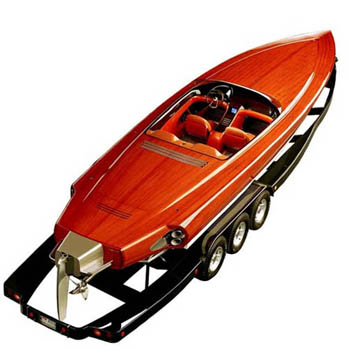
Protect your boat. Have it professionally appraised!

 To request an appraisal, please complete the sections below: