
Insurance Wants to Repair My Car, but Should It Be Totaled?
After a serious car accident, you may expect your insurance company to declare your vehicle a total loss. Instead, the adjuster tells you the car can be repaired.
But what happens if you disagree?
Perhaps the damage is extensive, the repair estimate seems unusually high, or you're concerned that the vehicle will never be worth as much as it was before the accident.
These concerns are understandable. While insurance companies generally determine whether a vehicle will be repaired or declared a total loss, their decisions must follow applicable state laws and insurance policy requirements.
Understanding how those decisions are made—and when a professional vehicle appraisal may help—can put you in a better position to protect your interests.
How Do Insurance Companies Decide Whether to Total a Car?
An insurance company typically considers a vehicle a total loss when repairing it is either impractical or too expensive relative to its pre-accident value.
The decision usually involves several factors:
- Actual cash value (ACV): The vehicle's estimated market value immediately before the accident
- Estimated repair costs: The amount needed to restore the vehicle to an acceptable pre-loss condition
- Salvage value: The estimated amount the damaged vehicle could be sold for in its unrepaired condition
- State total loss requirements: Legal thresholds or formulas that determine when a vehicle must be classified as a total loss
- Additional damage: Hidden structural, mechanical, or electronic problems discovered during the repair process
Some states use a percentage-based total loss threshold. Others rely on formulas that consider repair costs, vehicle value, and potential salvage value.
For example, in Maryland, the total loss threshold is generally 75% of a vehicle's pre-loss fair market value. Other states establish different requirements.
This means two similarly damaged vehicles may receive different total loss determinations depending on where the claim is being handled.
What If You Disagree With the Insurance Company's Decision?
If your insurer wants to repair a vehicle you believe should be totaled, you may have options.
Start by requesting a detailed explanation of the decision, including the repair estimate and the vehicle's assessed pre-accident value.
Review the documentation carefully. Make sure the estimate accounts for all known damage and that the vehicle valuation accurately reflects its mileage, condition, equipment, and relevant upgrades.
You can also consider obtaining an independent repair assessment or vehicle appraisal.
If additional damage is discovered during repairs, the repair facility may submit a supplemental estimate. An increase in repair costs could cause the insurance company to reconsider whether the vehicle should be declared a total loss.
Depending on your insurance policy and state law, you may also have access to an appraisal provision or other dispute resolution procedures.
An independent appraisal doesn't automatically overturn the insurer's decision, but it can provide documented evidence to support a disagreement over the vehicle's value.
What Happens If Your Car Is Repaired Instead of Totaled?
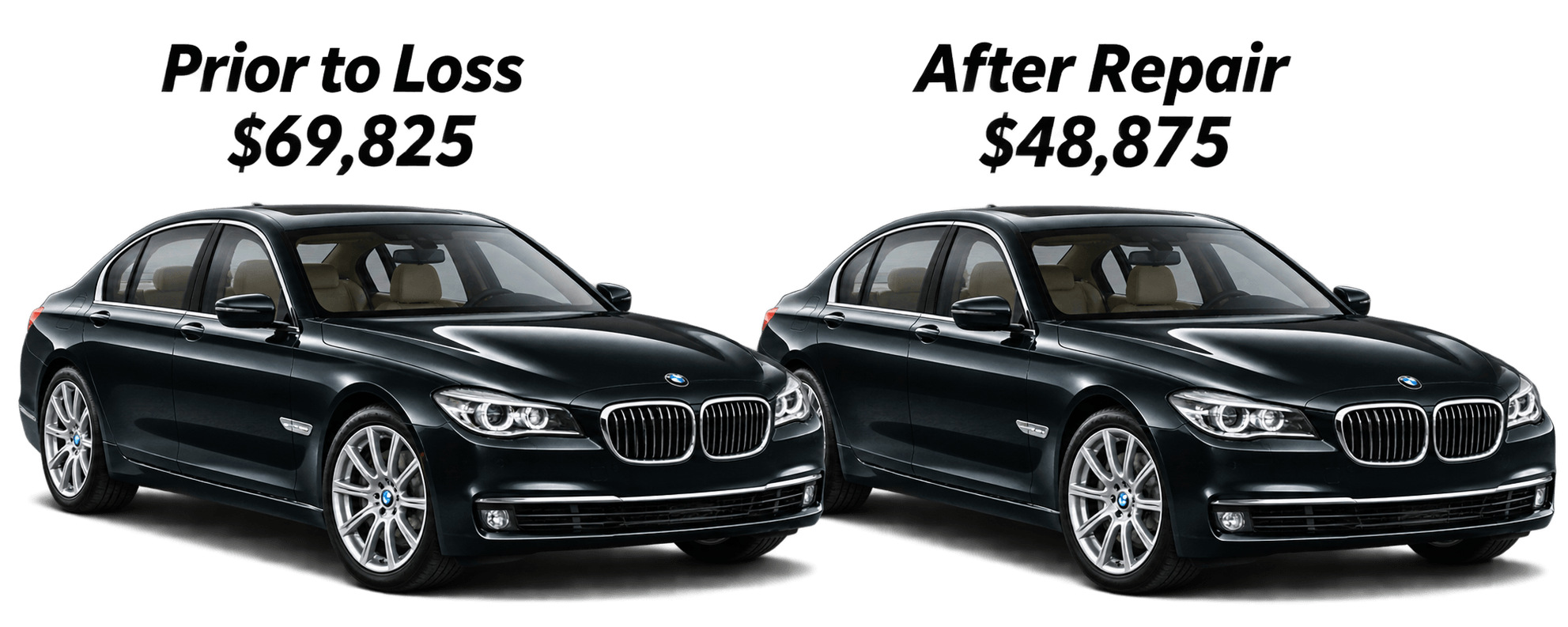
Suppose your vehicle had a pre-accident market value of $30,000.
Following an accident, the insurance company approves $18,000 in repairs rather than declaring it a total loss.
The repairs are completed, and the vehicle looks and drives as it did before the collision.
But there's another question worth asking:
Is your repaired vehicle still worth $30,000?
Potential buyers often consider a vehicle's accident history when deciding how much they're willing to pay.
Even when repairs are performed correctly, a car with a documented collision history may sell for less than a comparable vehicle that has never been damaged.
This potential reduction in market value is known as diminished value.
What Is Diminished Value After an Accident?
Diminished value is the reduction in a vehicle's market value resulting from damage, accident history, or repairs.
One common form is inherent diminished value, which describes the loss that may remain after satisfactory repairs have been completed.
For example:
| Vehicle valuation | Amount |
| Pre-accident market value | $30,000 |
| Post-repair market value | $26,000 |
| Estimated diminished value | $4,000 |
In this hypothetical example, the accident resulted in an estimated $4,000 reduction in market value, even after the repairs were completed.
That doesn't necessarily mean the insurance company must pay $4,000.
Eligibility and compensation depend on applicable state law, liability, insurance coverage, and evidence supporting the claimed loss.
Can You Claim Diminished Value If You Were Not at Fault?
In many states, a driver who was not responsible for an accident may be able to pursue a diminished value claim against the at-fault party or their liability insurance company.
This is known as a third-party diminished value claim.
The purpose is to seek compensation for the measurable loss in market value that remains after the vehicle has been repaired.
However, the ability to recover diminished value varies by state and by the specific circumstances of the accident.
If you were responsible for the collision, seeking diminished value compensation under your own collision coverage is generally more difficult. Most standard policies do not automatically cover this type of loss, although exceptions exist under certain state laws and policy provisions.
For this reason, it's important to review your coverage and understand the rules governing your claim.
How Can an Independent Appraisal Help?
When a vehicle owner disagrees with an insurance company's valuation or wants to document accident-related diminished value, an independent appraisal can provide additional information.
Depending on the assignment, a professional appraiser may evaluate:
- The vehicle's pre-accident market value
- The extent and nature of the accident damage
- Repair estimates and completed repair documentation
- The vehicle's condition following repairs
- Comparable vehicles and relevant market data
- The estimated difference between pre-accident and post-repair market values
A well-supported appraisal report can help explain how the accident affected the vehicle's value and provide documentation for discussions with the insurance company.
For owners of classic, collector, luxury, or specialty vehicles, an individualized appraisal may be especially valuable because standard valuation tools do not always capture the characteristics that influence these vehicles' market prices.
An appraisal is evidence of value, not a guarantee of an insurance settlement or a determination of legal eligibility.
Don't Overlook the Value of Your Vehicle After Repairs
A car can be repaired successfully and still experience a measurable loss in market value.
If your insurance company has decided to repair a vehicle you believe should have been totaled, understanding its pre-accident value, repair costs, and potential post-repair diminished value can help you make more informed decisions.
Every accident and insurance claim is different, which is why accurate documentation and an independent assessment may be important.
Find a Vehicle Appraiser Near You
Auto Appraisal Network provides independent vehicle appraisal services to help owners document their vehicles' market value, evaluate accident-related losses, and support insurance-related valuation disputes.
Whether you need an assessment of your vehicle's pre-accident value or a professional diminished value appraisal following repairs, our network can help you find an experienced appraiser.
Concerned about your vehicle's value after an accident?
Find an Auto Appraisal Network appraiser in your area to discuss your situation and available appraisal services.
