
What Information Does a Vehicle Appraiser Need?
Whether you're having your car appraised for insurance, resale, an estate settlement, or simply to understand what it's worth, a little preparation can make the process much easier.
A professional vehicle appraisal involves more than checking the mileage and taking a few photos. The appraiser needs to understand the vehicle's condition, equipment, history, and any features that could affect its value.
Most of the necessary information can be collected during a physical inspection, but having your paperwork ready can help the appraiser produce a more complete and accurate report.
Start With the Basics: Vehicle Identification
The first step is confirming exactly what vehicle is being appraised. Your appraiser will typically record:
Vehicle Identification Number (VIN): Used to identify the vehicle and verify its basic specifications.
Odometer reading: Helps establish mileage, although the displayed reading may not always represent the vehicle's actual total mileage.
Make, model, and model year: Essential for comparing the vehicle with similar examples.
Engine and transmission details: Particularly important for performance cars, rare models, and collector vehicles.
Factory paint, trim, and body codes: Help determine the vehicle's original configuration.
Optional equipment and modifications: Can influence value depending on the vehicle and the purpose of the appraisal.
For classic and collector cars, the appraiser may also inspect engine casting numbers, production dates, body tags, and other identifying marks to determine originality.
Title and Registration Documents
Your vehicle's title and registration are among the most useful documents to have available.
They help confirm the vehicle's identity and may provide information about its ownership history, registration status, and title branding.
Occasionally, the VIN on a title or registration doesn't match the number displayed on the vehicle. This can happen because of a clerical error, especially with older vehicles whose identification numbers may follow different formats.
If there's a discrepancy, it should be investigated and corrected through the appropriate state motor vehicle agency. An appraiser can document the inconsistency, but cannot independently change an official title record.
It's also important to disclose any salvage, rebuilt, flood, or other title brands, since these can significantly affect a vehicle's market value.
Vehicle History and Ownership Records
A well-documented vehicle history can be especially valuable for classic, antique, and collectible automobiles.
Previous titles, bills of sale, ownership records, restoration photographs, and historical documents can help establish a vehicle's background.
Some rare and limited-production cars also have dedicated registries that track known surviving examples. These records can help verify production details and ownership history, although registry information should be supported by other documentation whenever possible.
For valuable collector cars, provenance can be just as important as condition. Knowing where a car came from, who owned it, and how it was maintained can make a meaningful difference in its desirability.
Maintenance, Repair, and Restoration Records
If you've kept receipts for maintenance, repairs, upgrades, or restoration work, gather them before your appraisal.
These documents help the appraiser understand what has been done to the vehicle and when.
For example, a documented engine rebuild, professional restoration, or major mechanical repair may support the vehicle's condition and value. However, the amount spent on repairs or improvements doesn't necessarily translate into an equal increase in market value.
The appraiser will consider the quality of the work, its relevance to the vehicle, and how similar vehicles are valued in the current market.
For insurance-related appraisals, documentation of custom equipment and modifications can be particularly important when determining whether additional coverage may be needed.
Original Window Stickers and Factory Documentation
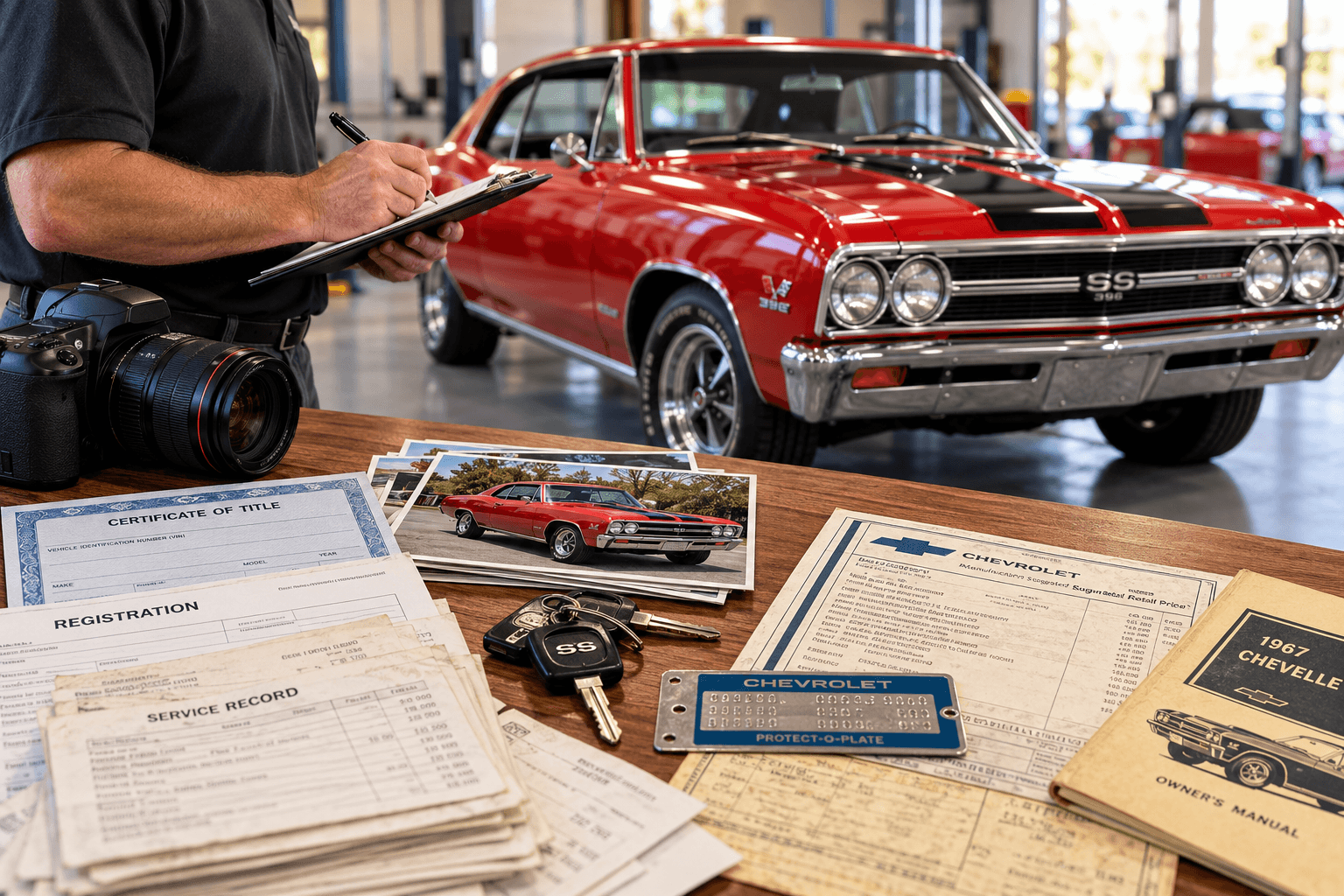
If you still have the original window sticker, build sheet, factory invoice, or owner's manual, make sure your appraiser sees them.
These records can help establish how the vehicle was originally equipped, including factory-installed options, trim packages, and other specifications.
This is especially useful for classic muscle cars, limited-production models, and vehicles with rare factory options.
For some collector vehicles, original documentation can help distinguish a genuine factory performance model from a later modification or tribute build.
Other Documents Worth Keeping
Sometimes the smallest pieces of paperwork tell an important part of a vehicle's story.
Original warranty cards, Protect-O-Plates, dealer invoices, spare keys, historical photographs, and period magazine articles may all help establish authenticity or provenance.
A Protect-O-Plate, for example, can provide valuable factory and ownership information for certain vintage General Motors vehicles.
If your vehicle has won awards, appeared in publications, or undergone a documented professional restoration, those records may also be useful.
Not every document will increase the appraised value, but together they can provide a more complete picture of the vehicle's history.
What About the Vehicle's Current Condition?
Documentation is important, but it doesn't replace a thorough inspection.
Your appraiser will evaluate the vehicle's visible condition, including the body, paint, interior, tires, wheels, and accessible mechanical components. They may also document signs of previous repairs, damage, corrosion, or modifications.
Photographs are typically included in the appraisal report to support the vehicle's condition and identification.
Be prepared to point out any known mechanical problems, accident damage, or repairs that may not be immediately obvious.
If the appraisal is being completed remotely, the appraiser may request additional photographs, videos, and supporting records. The report should clearly explain any limitations caused by the absence of a physical inspection.
Why the Purpose of the Appraisal Matters
Not every vehicle appraisal is intended to determine the same type of value.
An appraisal for a private sale may focus on current market value, while an insurance appraisal may be used to support a requested insured amount. Estate, divorce, donation, and legal matters can require different valuation definitions, effective dates, or documentation.
For example, an appraisal submitted to an insurance company does not automatically establish an agreed-value policy. The coverage amount and settlement terms must be accepted by the insurer and reflected in the policy.
That's why one of the first questions your appraiser should ask is: What do you need the appraisal for?
The answer helps determine which information is relevant and how the final valuation should be presented.
Special Requirements for Tax and Legal Appraisals
If your appraisal is intended for a charitable donation, estate, or legal proceeding, let your appraiser know before the inspection. These assignments may involve specific valuation dates, documentation requirements, or professional qualifications. For example, certain charitable contributions require an IRS-qualified appraisal and Form 8283, although special rules apply to donated vehicles. Providing this information upfront helps ensure the report is prepared for its intended use.
Be Prepared for Your Vehicle Appraisal
You don't need to have every document ever issued for your car before scheduling an appraisal. In most cases, the appraiser can collect the essential information directly from the vehicle.
However, the more reliable information you can provide, the better equipped the appraiser will be to explain and support the vehicle's value.
Whether you own a daily driver, a restored classic, or a rare collector car, keeping accurate records is one of the simplest ways to protect your investment.
Protect Your Investment. Have It Appraised!
